Home / Style Guides / Jensen Huang Outfit
Dress Like NVIDIA CEO Jensen Huang: The AI CEO's Iconic Black Leather Jacket Style
He runs the company whose chips power much of the AI boom, and he shows up to the biggest stage in tech dressed like a rock tour's lead guitarist. The Jensen Huang outfit is a black leather jacket, a black tee and dark everything else.
One black leather jacket. Everything else stays quiet.
Jensen Huang's wardrobe is not complicated, and that is the whole idea. For years the NVIDIA founder and CEO has been photographed in a black leather jacket over dark clothes, on keynote stages, magazine covers and red carpets. Ask anyone to picture the NVIDIA CEO and the jacket arrives before the face does.
Below is a five-piece Jensen Huang-inspired outfit built from real Amazon clothing, with what to look for in each piece and why this look has become one of the most recognizable in tech. It is our affordable interpretation of his public style. It is not a claim about the exact garments he owns, and the jacket we picked is faux leather, which we explain below.
The Jensen Huang-inspired outfit, five pieces
Built by Clotheme.ai from real Amazon listings. Prices were listed on October 6, 2026 and can change.
-
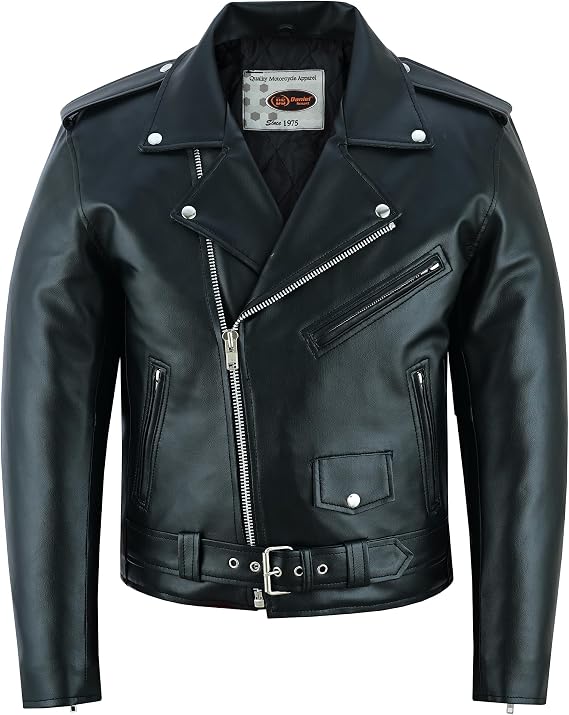
Outerwear · The signatureDaniel Smart Men's Motorcycle Faux Leather Jacket - Black Economy Zip Up Moto Biker Jacket
The anchor of the look. Black, zip front, biker shape. Faux leather, and labeled that way.
$63.74Shop on Amazon -
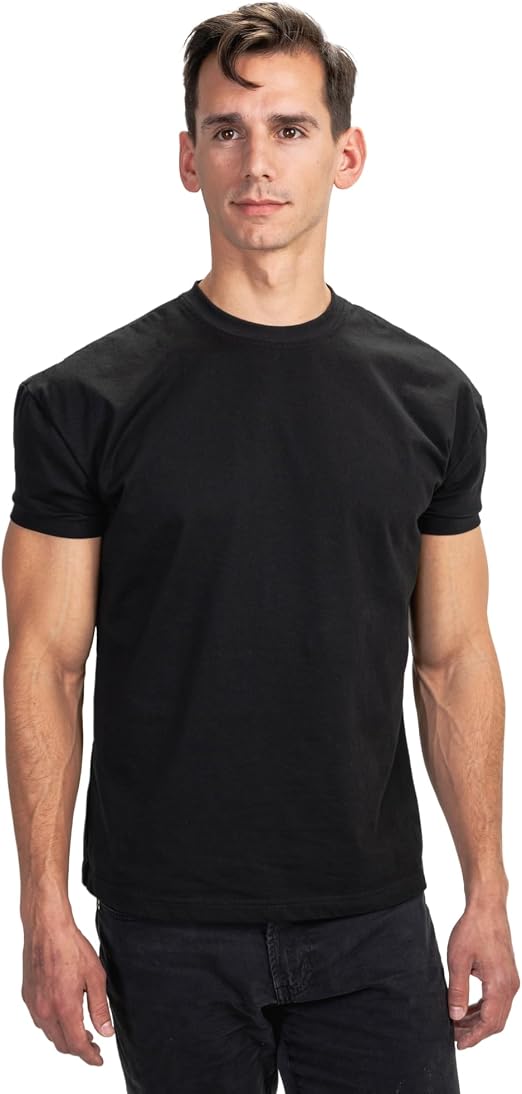
BaseMen's Structured Fit T-Shirt, Premium Combed Cotton Blend, Black
A plain black base with no graphic, so the jacket stays the only statement.
$34.99Shop on Amazon -
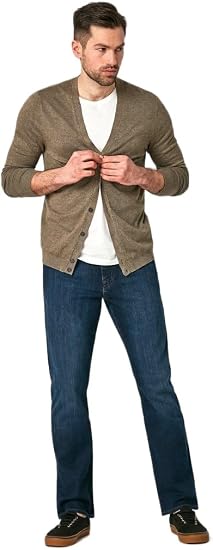
BottomMavi Men's Zach Mid Rise Straight Leg Jeans, Deep Brushed Williamsburg
Dark denim that keeps the palette quiet and takes the edge off the jacket.
$98.00Shop on Amazon -
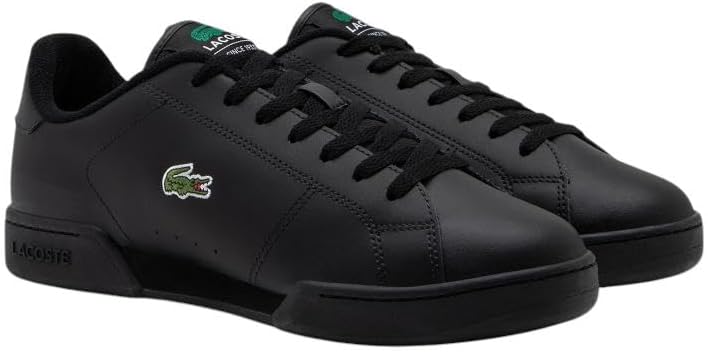
FootwearLacoste Men's Carnaby Cup Leather Sneakers, Black
Black leather keeps the outfit cohesive and modern, not motorcycle-club.
$73.82Shop on Amazon -
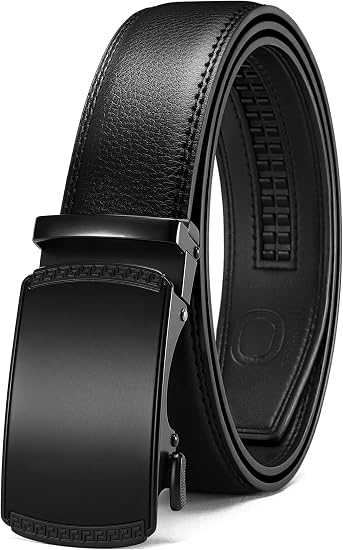
AccessoryCHAOREN Men's Leather Ratchet Belt - Customizable Fit (35mm)
A quiet finishing detail. Nobody should notice it, which is the point.
$14.99Shop on Amazon
As an Amazon Associate, Clotheme.ai earns from qualifying purchases at no extra cost to you.
Who is Jensen Huang?
Huang co-founded NVIDIA in 1993 and has led it as CEO ever since. The company started in graphics chips for PC gaming, then spent two decades turning those processors into general-purpose engines for heavy computing. When AI researchers discovered that GPUs were excellent at the math behind neural networks, NVIDIA was already sitting on the right hardware and the software to go with it.
That timing made him one of the defining executives of the AI era, and one of the few CEOs recognizable from a tiny thumbnail: a leather jacket, a wide grin and a very large screen behind him. The clothing matters here because it is a shortcut. It tells you who is on stage before the first slide.
What does Jensen Huang usually wear?
The formula is short:
- A black leather jacket, usually a biker or moto cut
- A black or very dark shirt underneath
- Dark trousers or jeans
- Dark, understated footwear
That does not describe every public appearance he has ever made, and he has worn other things. But it is his signature public look, and it is the one most people mean when they say "the Jensen Huang outfit." The look reads as minimal, dark, modern and a little rebellious: casual, but clearly chosen.
Repetition is what does the work. Quartz noted that Reuters photos of Huang from 2013 onward show him in a jacket, while photos from 2009 and 2010 show him in tees and polos. Somewhere in between, the jacket stopped being a clothing choice and became part of how people identify him.
Why Jensen Huang's black leather jacket became iconic
The black leather jacket is his most recognizable item by a wide margin. Fortune reports that a company spokesperson told the New York Times he has worn black leather jackets for at least 20 years. In a 2016 Reddit AMA he introduced himself as "the guy in the leather jacket who repeats things three times."
Fortune also reports that he has been seen in Tom Ford biker-style jackets priced at roughly $7,000 to $9,000, including one at GTC 2025 and another at CES 2025. We cannot tell you which jacket he wears on any given day, and he owns more than one. What the reporting does show is that the style is consistent even when the specific jacket changes: black leather, biker shape, clean lines.
On who picks the clothes, Huang has said, as quoted by Fortune: "I'm happy that my wife and my daughter dress me." That is a useful detail for anyone copying the look. It was assembled with outside input, and it is meant to look effortless.
Why it works on stage is simple. A black leather jacket has a clear outline, photographs well under stage lighting and looks the same from the last row as from the front. It also breaks the standard tech-executive formula. Steve Jobs had the black turtleneck and Mark Zuckerberg had the gray tee, both quiet. Huang's jacket is louder, and the rest of the outfit stays dark so it carries all the attention.
Documented
- A long-running habit of black leather jackets, at least 20 years per a company spokesperson
- Tom Ford biker-style jackets at recent keynotes, as reported by Fortune
- His family helping choose his clothes, in his own words
Clotheme.ai's interpretation
- The five specific products on the board above
- A faux leather jacket at about $64, not a $7,000 designer one
- Not a claim that he owns or wore these exact items
How to dress like Jensen Huang, piece by piece
1. The black leather (or faux leather) jacket
Look for a plain, zip-front biker or moto cut in solid black with defined shoulders. Skip distressing, patches, heavy hardware and studs. The shape matters more than the material, and our pick is faux leather at $63.74 because real leather jackets cost far more.
That is a real difference and you should know it. A genuine leather jacket will age better and feel heavier. A faux one gets you the same black outline for about 1% of what the reported designer jackets cost. If you want real leather, expect to spend well above $100 and read the listing carefully, because very cheap listings that claim "genuine leather" are often not.
2. The black T-shirt
Choose a structured, mid-weight tee with no graphic and a collar that holds its shape. A thin tee under a leather jacket looks flimsy. This combed cotton blend at $34.99 is plain on purpose. And do not wear an NVIDIA logo tee. It turns the outfit into merchandise.
3. The dark straight-leg jeans
Straight-leg denim keeps the look wearable and avoids a fashion-forward vibe. Our pick is a dark blue wash, not pure black. If you want the strictest black-on-black version, black straight-leg jeans or trousers would be closer to his usual palette, so treat these as a slightly softer interpretation. They are also the priciest piece here at $98.00. Any dark, straight, plain pair does the same job.
4. The black leather sneakers
Minimal black leather sneakers with a clean sole keep things modern. Boots would push the outfit toward a motorcycle look. These Lacoste Carnaby Cups at $73.82 have a low profile and almost no branding.
5. The black leather belt
A plain black belt with a quiet buckle is the finishing detail. It should disappear, so keep it matte and skip logos. The ratchet style at $14.99 also fits cleanly under a short jacket.
Jensen Huang-inspired outfit at a glance
| Piece | Jensen Huang-inspired choice | Why it works |
|---|---|---|
| Jacket | Black faux leather moto jacket · $63.74 | The signature anchor |
| Shirt | Black structured T-shirt · $34.99 | Dark, plain base |
| Jeans | Dark straight-leg jeans · $98.00 | Casual and understated |
| Shoes | Black leather sneakers · $73.82 | Modern finish |
| Belt | Black leather ratchet belt · $14.99 | Keeps the palette consistent |
Is this actually Jensen Huang's style?
It is an interpretation of his recognizable public style. These Amazon products are not his clothes, and nothing here suggests they are. The elements we kept are the ones that show up again and again in photos and reporting: black leather outerwear, a dark monochrome base, a simple shirt, dark trousers or jeans and minimal footwear. The specific brands, prices and leather quality are ours.
How to dress like Jensen Huang without looking like you're wearing a costume
- Keep the palette mostly black. Dark denim is the only break.
- Let the jacket be the statement. Everything else is supporting cast.
- Avoid giant logos, including NVIDIA ones and GPU graphics.
- Pick a clean jacket, not a heavily distressed biker one.
- Wear a simple black shirt and skip the graphic tees.
- Choose straight or relaxed-straight jeans.
- Keep footwear minimal. Plain sneakers beat combat boots.
- Skip chains, patches and biker accessories.
- Focus on fit. The jacket should reach your waistband, with sleeves that end at the wrist.
The target is a tech executive with a distinctive uniform, not someone who just left a motorcycle rally.
Why the Jensen Huang uniform works
Consistency
Repeating the same clothes builds a recognizable image faster than any single great outfit. People remember the pattern.
Contrast
A leather jacket is more expressive than the usual Silicon Valley hoodie or sweater, which makes him stand out in a room of similar people.
Simplicity
The rest of the outfit is quiet on purpose. One loud piece, nothing else competing.
Branding
When a CEO's clothes become part of the story, the clothes do free marketing. Retailers have sold "Jensen Huang" jackets, as Quartz noted, which tells you how far the image has traveled.
Stage presence
Leather reads well on huge stages and in photographs. A navy sweater disappears. A black jacket under stage lights does not.
Jensen Huang, NVIDIA and the AI revolution
You do not need to care about chips to enjoy the outfit, but it helps to know why a CEO's wardrobe gets this much attention. NVIDIA's GPUs, graphics processing units, handle huge numbers of calculations in parallel, which is what training and running modern AI models demands. In 2006 NVIDIA released CUDA, a software platform that let developers use those chips for general computing, and that software ecosystem is a large part of why the hardware became the default for AI work.
Today NVIDIA sells AI chips, systems and software to the data centers that run generative AI, and Huang talks about the whole stack as accelerated computing. When one company's hardware sits underneath much of a technology boom, its CEO becomes a public figure. The jacket came along for the ride.
Jensen Huang, AI agents and the next phase of computing
The newest part of the conversation is agentic AI. A chatbot answers a question. An AI agent carries out a multi-step task: it uses tools, makes decisions along the way and keeps going with less hand-holding. That is a different workload, and it consumes far more computing power than a simple prompt and reply.
That is the bet behind NVIDIA's current messaging. At GTC in March 2026, Huang said, as reported by Techstrong, "The agentic AI inflection point has arrived, kicking off the greatest infrastructure buildout in history." Whether that turns out to be right is a separate question. We are reporting what he said, not predicting anything.
Why NVIDIA chips matter to AI
Two terms are worth knowing. Training is how an AI model learns, which takes enormous computing power over days or weeks. Inference is how a trained model answers a request, which happens every time someone uses it. Both run on accelerators, and NVIDIA's data-center GPUs are among the best known.
NVIDIA's current architecture is Blackwell, and its next platform is Vera Rubin, which TechRepublic described as combining seven chips into one vertically integrated system. NVIDIA calls the facilities built around these systems AI factories, because they take in data and power and produce AI output at scale.
What's happening with Jensen Huang and NVIDIA now?
The most recent big moment is GTC 2026 in March, which Techstrong described as the "Super Bowl of AI." TechRepublic reported that he said he expects at least $1 trillion in revenue between 2025 and 2027 from what he calls the "five-layer cake of artificial intelligence." That is a forward-looking statement from the CEO, not a result, and it is not investment advice. As always with fast-moving tech news, check NVIDIA's own newsroom for the latest.
Explore more CEO and business styles
Jensen Huang joins Michael Saylor in our Business & Tech Icons section. If this look appeals to you, the Michael Saylor outfit guide shows the opposite approach: a traditional boardroom suit with a single orange tie. For the original tech-founder uniform, read the Steve Jobs outfit guide. For more black-and-leather references, see Tyler Durden, Patrick Bateman and James Dean, whose leather jacket helped define the category.
Jensen Huang outfit: your questions answered
What does Jensen Huang wear?
He is best known for a black leather jacket worn over a black or very dark shirt, with dark trousers or jeans and dark footwear. That is his signature public look, not every appearance he has made.
How do I dress like Jensen Huang?
Start with a clean black moto or biker jacket, add a plain black tee, dark straight-leg jeans, minimal black sneakers and a simple black belt. Avoid logos, patches and chains. The five-piece build above costs about $286.
What kind of leather jacket does Jensen Huang wear?
Fortune reports Tom Ford biker-style jackets priced at roughly $7,000 to $9,000, including at GTC 2025 and CES 2025. He owns more than one, and we cannot say which he wears on a given day. Our outfit uses a faux leather moto jacket at $63.74 as an affordable interpretation.
Why does Jensen Huang always wear a leather jacket?
He has not given one formal reason in the sources we reviewed. A company spokesperson told the New York Times he has worn black leather jackets for at least 20 years, and in 2016 he called himself "the guy in the leather jacket who repeats things three times." He has also said his wife and daughter dress him.
What is Jensen Huang's style?
Minimal, dark and consistent: black leather outerwear, a plain dark base and understated footwear. The repetition is what makes it recognizable.
What shoes does Jensen Huang wear?
We could not find a reliable source naming a specific pair. His look generally uses dark, understated footwear, so our interpretation uses plain black leather sneakers.
What does the NVIDIA CEO wear?
Jensen Huang, NVIDIA's co-founder and CEO, is known for a black leather jacket, a dark shirt and dark bottoms, especially at keynotes such as GTC.
Why is Jensen Huang's leather jacket so iconic?
Repetition, contrast and stage presence. He wears it constantly, it stands out from the typical tech-executive sweater or hoodie, and black leather photographs well on large stages.
What is Jensen Huang known for besides NVIDIA?
His clothing, mainly. The black leather jacket is such a strong part of his public image that retailers have sold jackets marketed as inspired by him, as Quartz has noted.
What does NVIDIA have to do with AI?
NVIDIA makes GPUs, which handle many calculations in parallel, the kind of math that training and running AI models needs. Its CUDA software platform, released in 2006, helped make its chips a default choice for AI work.
What are NVIDIA AI chips?
They are GPUs and related processors designed for AI workloads in data centers. Blackwell is NVIDIA's current architecture and Vera Rubin is its next platform, according to coverage of GTC 2026.
What is Jensen Huang's role in AI?
He is the CEO of the company whose hardware underpins much of today's AI computing, and he is one of the industry's most visible spokespeople for accelerated computing and agentic AI.
What is agentic AI?
AI that carries out multi-step tasks on its own, using tools and making decisions along the way, instead of only answering a single question like a basic chatbot.
Sources
- Fortune: Jensen Huang's black leather jackets cost thousands of dollars (March 2025)
- Quartz: Nvidia's Jensen Huang has turned a leather jacket into a trillion-dollar look
- TechRepublic: Nvidia GTC 2026, 5 biggest takeaways (March 2026)
- Techstrong.ai: NVIDIA ignites agentic AI era with Vera Rubin platform at GTC (March 2026)
- Wikipedia: Jensen Huang (background)
More executive and leather-jacket guides
Type a name. Get the outfit.
Type "Jensen Huang," or any executive, actor or character, into the free Clotheme.ai Chrome extension and it researches the look and builds a shoppable outfit from real Amazon products.
Install FreeClotheme.ai is not affiliated with Jensen Huang or NVIDIA. This article is style commentary based on public reporting, not financial advice. Nothing here is a recommendation to buy or sell any security.